UI vs. UX Design: What's the Difference?

Understanding user experience (UX) and user interface (UI) design is the foundation for building something worthy enough to become someone’s favorite product. Get it right early and you build products that users proudly adopt and endorse to their friends. Get it wrong and you end up with something that feels like it was assembled in a hurry.
When UX and UI work together, the result is an attractive and easy-to-use product. Below, we break down what each of these design disciplines involves and why they’re both essential for business success.
Need a product that feels as good as it looks? Klimt & Design helps teams align UX strategy and UI design so users quickly understand the value you bring.
What is UX Design?
UX, short for “user experience,” is the practice of designing products that are useful, usable, and genuinely satisfying to interact with. It starts long before anything is designed and continues well after a product ships.
UX designers ask questions like:
- Who are our users?
- What are they trying to accomplish?
- Where do they get stuck?
- What would make this product feel effortless?
They work from research, not assumptions, and their job is to ensure that every step your product asks of a user is justified—and as frictionless as possible.
Consider Duolingo, the popular language learning app and marketing media darling. Its personalized language lessons are delivered through an approachable and inviting UX—one so engaging that the app has been called addictive.
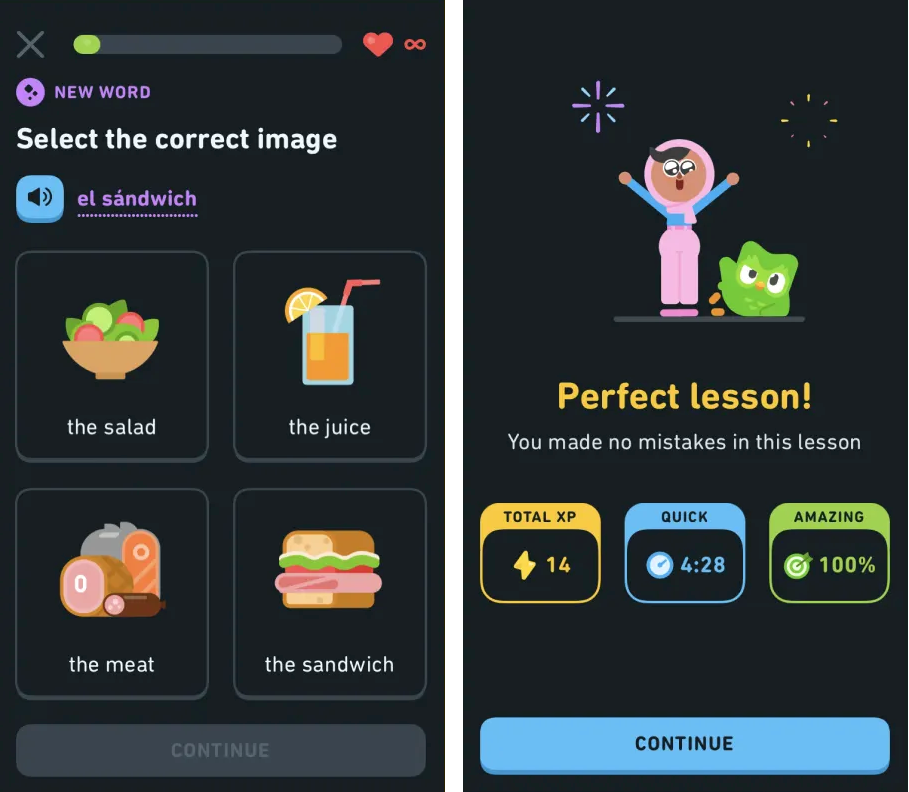
That’s UX done right.
What makes UX particularly valuable is that it's iterative by nature. It involves ongoing testing and refinement as real users interact with your product in real-world conditions.
UX Design Deliverables
What is UI Design?
UI, short for “user interface,” covers every visual element a user interacts with: buttons, typography, color palettes, icons, form fields, spacing, navigation, and more.
UI designers translate UX wireframes into polished, visually consistent interfaces. Their work influences whether:
- your product looks trustworthy
- your brand feels recognizable across every screen
- users intuitively understand where to click, scroll, or tap
This matters more than most founders realize. According to a Carleton University study, it takes roughly 50 milliseconds for users to form an opinion about a website. That snap judgment happens mostly at the visual layer, before anyone carefully reads a single word of your site’s copy.
A strong UI also reinforces brand identity. Typography, colors, icons—it all works together to create a recognizable picture of your business to users who may be comparing you against competitors.
UI Design Deliverables
UX vs. UI: A Side-by-Side Comparison
In a nutshell, UX determines how your product is structured and how users move through it. UI determines how your product looks and feels.
The Skills Behind Each Discipline
UX and UI design draw on different skill sets, which is why finding a single designer who excels at both is rare.
UX Designer Skills
- User research methods (interviews, surveys, usability testing)
- Information architecture and content strategy
- Systems thinking and user journey mapping
- Prototyping and assumption testing
- Data synthesis and pattern recognition
- Empathy and facilitation
UI Designer Skills
- Visual design principles (hierarchy, contrast, alignment, balance)
- Typography and color theory
- Interaction and motion design
- Design systems and component libraries
- Responsive and accessible design
- Brand fluency
Leaning into one expertise without the other can make your product feel incomplete. For instance, a UX designer might produce wireframes that still need significant visual design work before they're ready for development. And a UI designer without UX knowledge may create something visually sharp but that doesn't reflect how users actually think or move through a product.
Simply put, the strongest products are typically built by teams where each discipline has dedicated ownership but work closely together.
Why Businesses Need Both UX and UI
Businesses need both UX and UI to create products that are simultaneously attractive and functional. Combined, these two disciplines can have a big impact on your bottom line:
- Increased conversion rates: A smooth website or product experience paired with engaging visuals encourages visitors to stay longer and keep browsing.
- Brand value and reputation: Professional UI and UX build your business’s sense of legitimacy and trustworthiness.
- Reduced development and support costs: Investing in proper UX design early prevents costly rework. It also reduces the likelihood of customer support issues in the long run.
- Competitive differentiation: In a crowded market, a user-centric product sets a business apart from competitors.
- Improved user loyalty: When a product is easy and enjoyable to use, people return—and recommend it.
While some may view design as an unnecessary expense to “make things look nice,” research clearly supports the business case for good design.
The Design Management Institute studied design-led U.S. companies like Apple, Nike, and Starbucks over 10 years (2003-2013), tracking their stock performance and comparing them to the S&P 500. The most striking finding: design-centric companies outperformed the S&P 500 by 228%. While the S&P 500 grew by about 75% during that decade, the portfolio of design-led companies grew by 299%.
What Should Your Business First Invest In?
If you're building or rethinking a product and you're not sure where to focus, here's a practical rule of thumb:
- If users aren't converting or regularly need support to complete basic tasks, you most likely have a UX problem.
- If users are bouncing quickly or your branding feels inconsistent across different touch points, you most likely have a UI problem.
Getting design right from the start is significantly less expensive than redesigning later. When UX and UI are aligned from the beginning, the result is a product that reduces friction and converts more of your target audience.
Work With a Team That Understands Both UX and UI
UI is how your product looks and feels. UX is how it works and flows. Together, they turn good ideas into products people actually adopt, even love.
At Klimt & Design, our UX and UI experts work closely together to help businesses build human-centric sites and products. Whether you're designing your first MVP or rethinking a product that isn’t gaining traction, we'd love to help. Get in touch with our team and we’ll help figure out what your product needs.
Related stories

How to Build Brand Recognition: 7 Actionable Tips
Building the kind of brand people remember doesn’t happen overnight or by accident.
7 Excellent Pitch Deck Examples & Why They Worked
The best way to strengthen your pitch deck is by studying decks that actually worked, especially the ones behind major brand names.